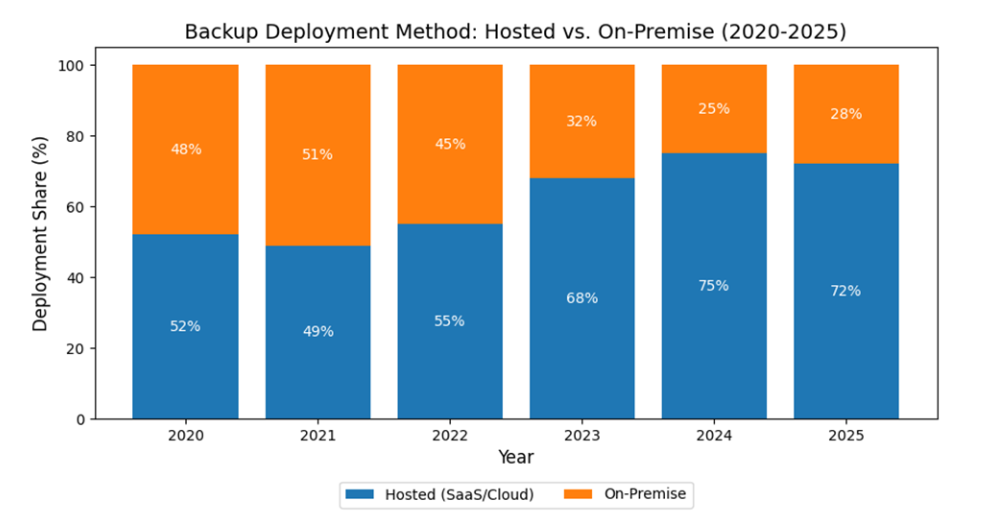
The G2 analysis makes it clear: SaaS is now the default approach to backup and recovery. But not all “SaaS” is created equal, and that’s where many organizations get stuck.
Native cloud vs. fully managed SaaS: the real difference
Most teams start their cloud journey with one of three options:
- Custom scripts to orchestrate snapshots and copies
- Native services like AWS Backup or Azure Backup
- Hosted backup software that still requires you to size, patch, and maintain infrastructure
These approaches can handle basic operational recovery, rolling back from an accidental delete or restoring a VM. But from a cyber resilience perspective, they share the same weaknesses: they often run in the same IAM boundary and control plane as production, lack true immutability or isolation by default, and provide limited threat detection or recovery assurance. If an attacker gets into your account, they can frequently delete your “backups” right along with your primary data.
A fully managed SaaS cyber resilience platform takes a very different approach:
In other words, you’re not just renting software in the cloud; you’re gaining resilience as a service.
What customers actually want from SaaS backup
The G2 review analysis highlights what buyers consistently value most in SaaS data protection:
- Ease of use – fast setup and intuitive interfaces, so backup doesn’t require a specialist
- Reliable protection – confidence that jobs run as expected and data is recoverable when it matters
- Automation – policy-driven, “set-it-and-forget-it” protection instead of manual babysitting
- Broad coverage – one platform that protects endpoints, SaaS apps, cloud workloads, and on-prem systems
- Responsive support – expert help on tap when something looks off, or an incident hits
These expectations line up almost perfectly with what fully managed SaaS delivers and expose the limitations of native tools that leave you stitching together scripts, consoles, and point products.
Druva: fully managed cyber resilience for modern workloads
Druva was built for this cloud-first world: a 100% SaaS data security and resilience platform that eliminates infrastructure, simplifies operations, and hardens your recovery posture by design.
With Druva, you get:
- Zero infrastructure to manage – Deploy in minutes with no appliances to rack, no storage to size, no patches to apply. A single control plane protects Microsoft 365, Google Workspace, Salesforce, endpoints, data center workloads, and cloud environments like AWS and Azure.
- Air-gapped, immutable backups – Data is written into Druva’s secure cloud vault, isolated from your production accounts and IAM paths. Immutability and data lock features prevent backups from being altered or deleted before their retention period, even by compromised admin credentials.
- Built-in cyber defense and recovery – Threat hunting, anomaly detection, and malware scans are integrated into the platform, so every recovery is a cyber recovery. Accelerated Ransomware Recovery (ARR) helps you quarantine suspicious snapshots, validate clean restore points, and orchestrate curated recovery into a known-good state.
- Managed detection and response for backup data – Druva’s Managed Data Detection & Response service adds 24x7 expert eyes on your backup environment, watching for ransomware behaviors and guiding your response when something goes wrong.
- AI-driven insight and investigation – A common metadata layer powers federated search, impact analysis, and AI assistance (through DruAI, Druva’s AI co-pilot) to accelerate investigations and help teams quickly understand what data was affected and where safe copies reside.
All of this is delivered via a consumption-based model with global deduplication and no hidden infrastructure costs; customers typically see up to 40% lower TCO versus legacy or DIY approaches.
A maturity model for cloud-native resilience
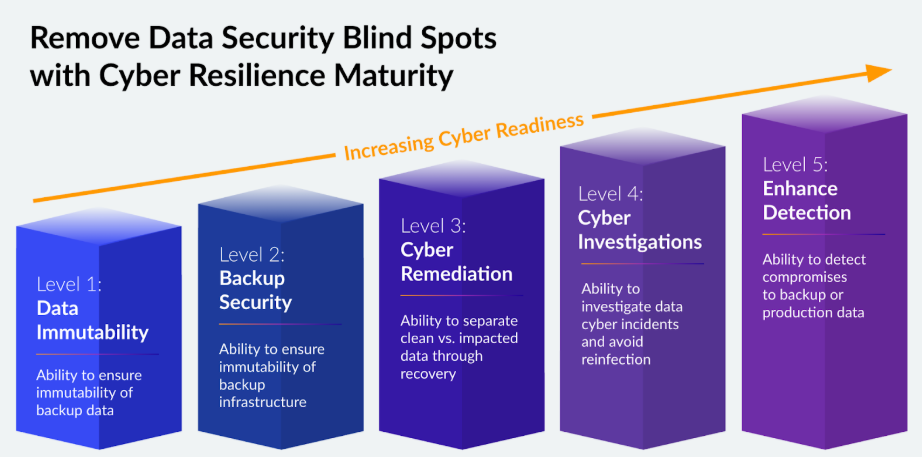
Druva’s five-level Cyber Resilience Maturity Model walks organizations from basic data immutability, through backup security and cyber remediation, to advanced cyber investigations and enhanced detection with 24x7 monitoring.