
For years, organizations have placed enormous trust in their primary defenses.
“We already have an XDR,” they say.
“We’re protected.”
But the threat landscape of 2024–2025 has made one thing painfully clear:
EDR/XDR alone is no longer enough to keep your data safe.
Today’s ransomware groups are not only capable of bypassing primary security, they are built for it. Their entire operational playbook revolves around identifying, disabling, and evading the very controls organizations believe will save them.
If you think having an EDR means you’re safe, this blog will change your mind.
1. Ransomware Groups Are Defeating EDR/XDR Every Single Day
Let’s begin with a hard truth:
Every major ransomware group today includes EDR/XDR bypass as a core capability.
Here’s what they are doing right now, across real-world incidents:
RansomHub
A major RaaS (Ransomware-as-a-Service) operation active globally, known for rapid affiliate growth since 2023–2024.
Targets healthcare, finance, manufacturing, and public-sector organizations through credential theft and partner-assisted intrusions.
Defense Evasion Technique: Clears logs, abuses WMI (Windows Management Instrumentation), deploys custom EDR-disabling modules, and uses BYOVD (Bring-Your-Own-Vulnerable-Driver) to neutralize endpoint protection,
BlackSuit (formerly Royal)
A rebrand of the Royal ransomware group, linked to Conti/TrickBot heritage, and known for enterprise-scale intrusions.
Relies on stolen admin credentials and lateral movement across Active Directory environments.
Defense Evasion Technique: Alters Group Policy Objects (GPOs) to weaken security controls and uses GMER and PowerTool to terminate EDR and kernel-protected processes.
Black Basta
A high-impact RaaS operation active since 2022, widely targeting healthcare, telecom, and critical infrastructure.
Intrusions frequently begin via phishing, VPN compromise, or exploit-based access.
Defense Evasion Technique: Executes Backstab and PowerShell-based kill scripts to disable antivirus and security services before encryption.
Akira
A fast-growing ransomware group affecting organizations in education, IT services, and manufacturing.
Notable for supporting Windows, Linux, and ESXi environments, including VM-based deployments.
Defense Evasion Technique: Runs from isolated virtual machines, abuses vulnerable anti-malware drivers, and terminates monitoring processes at the kernel level.
Phobos
A long-running ransomware strain typically spread through weak RDP exposure and credential compromise.
Primarily targets SMBs, municipal networks, and healthcare providers.
Defense Evasion Technique: Modifies firewall and RDP settings, uses ProcessHacker to kill protected processes, and clears critical event logs.
Play (PLAY Ransomware)
An aggressive group that frequently targets governments, manufacturing, and public entities.
Often gains access via credential theft or exploitation of Exchange vulnerabilities like ProxyNotShell.
Defense Evasion Technique: Uses recon from infostealers, identifies EDR installations, and leverages GMER + PowerShell to disable Microsoft Defender and remove telemetry logs.
Rhysida
Known for attacks on hospitals, universities, and government organizations, often linked with extortion-style impact.
Moves laterally using stolen credentials and existing remote management tools.
Defense Evasion Technique: Leverages valid credentials to access VMware/NAS systems and runs LOTL scripts such as SilentKill to quietly terminate AV and endpoint services.
Snatch
A distinctive ransomware family active since 2019, known for its Safe Mode encryption technique.
Often spreads through brute-forced RDP and exposed remote access services.
Defense Evasion Technique: Forces reboot into Safe Mode, where most security tools are inactive, enabling encryption without interference.
LockBit
One of the most prolific RaaS families globally, backed by a large affiliate structure and rapid version updates.
Responsible for thousands of breaches across critical infrastructure and enterprise environments.
Defense Evasion Technique: Uses a vast kill-chain toolkit including Backstab, TDSSKiller, DefenderControl, BatArmor, and multiple custom modules to disable EDR, AV, and system protections.
In other words:
Ransomware isn’t just encrypting systems anymore — it’s actively hunting and disabling your EDR/XDR before it ever begins encryption.
2. How These Groups Bypass EDR/XDR (Their Evasion Techniques)
Despite differences in branding, affiliates, methods, and tooling, the evasion principles remain identical across all groups:
✓ Disabling or impairing security tools
Using tools like ProcessHacker, PowerTool, Backstab, DefenderControl.
✓ Kernel-level tampering via BYOVD
Loading signed-but-vulnerable drivers to gain ring-0 control.
✓ Living-off-the-land (LOTL)
Abusing PowerShell, WMIC, certutil, schtasks, and PsExec to remain invisible.
✓ GPO manipulation and registry tampering
Modifying system policies to degrade security silently.
✓ Credential theft for stealthy lateral movement
Using legitimate credentials that EDR sees as “normal admin activity.”
✓ Anti-forensic cleanup
Deleting logs, clearing tracks, and erasing event traces before encrypting.
A Full Real-World Example: Ransomware Using API Unhooking to Defeat EDR
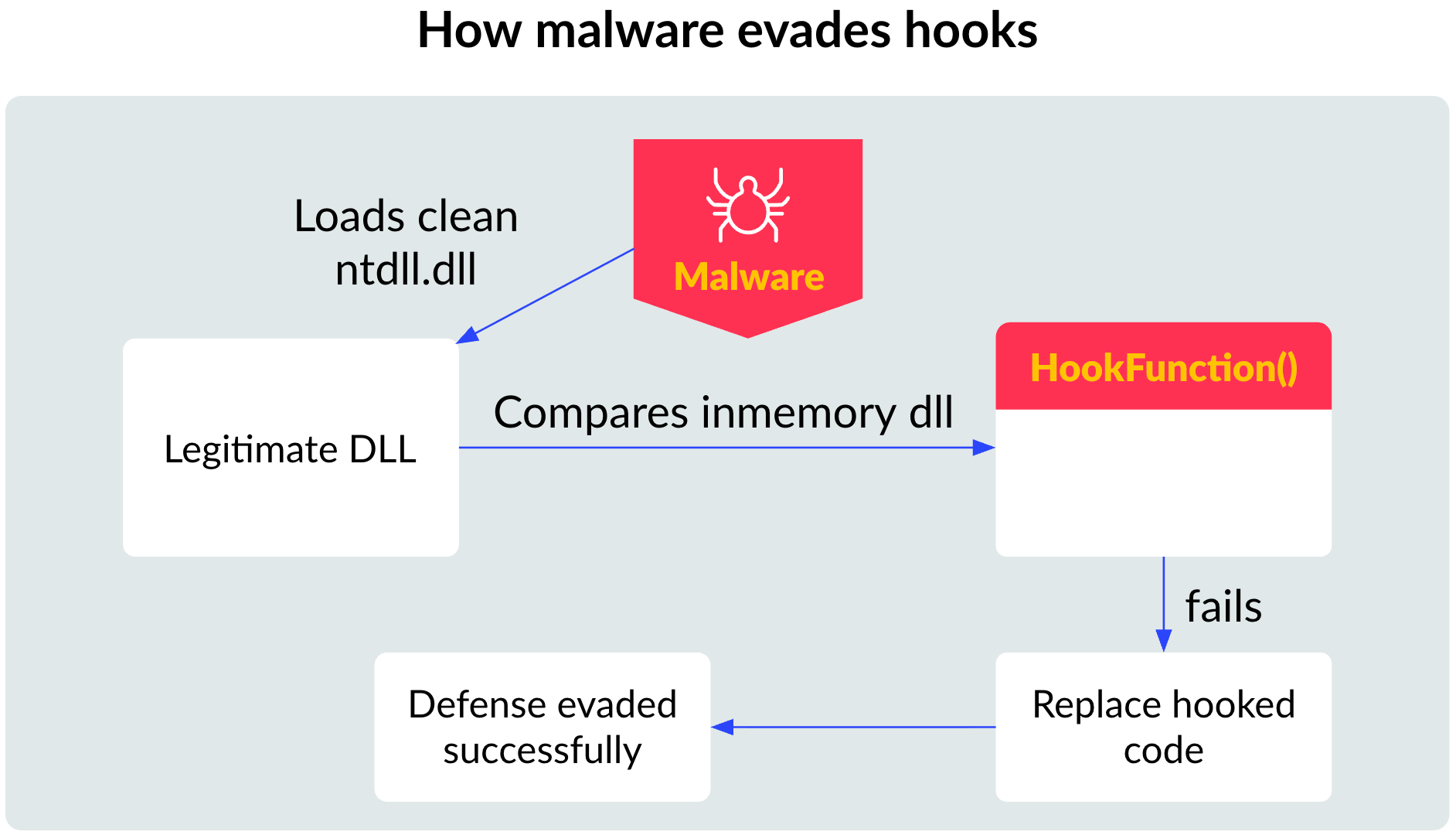
One of the most direct and powerful ways to blind an EDR is API unhooking, used by both malware families and modern ransomware.
This technique specifically targets userland API hooks inside ntdll.dll — the same hooks EDR relies on for monitoring suspicious behaviors.
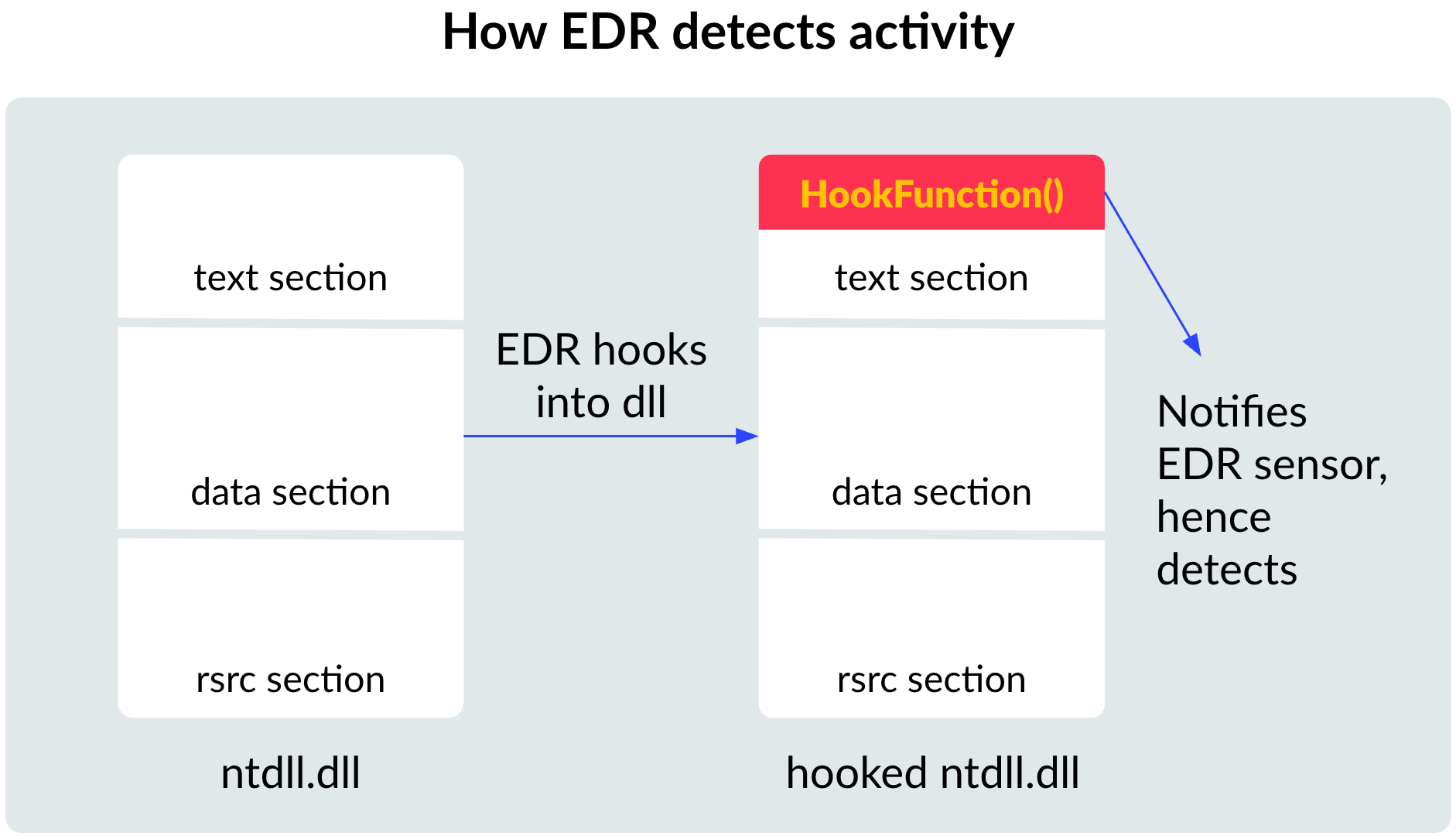
How EDR Hooks APIs
EDR injects JMP instructions at the start of sensitive functions such as:
- NtOpenProcess
- NtWriteVirtualMemory
- NtCreateThreadEx
The diagram below explains the hooking/unhooking in simple terms.