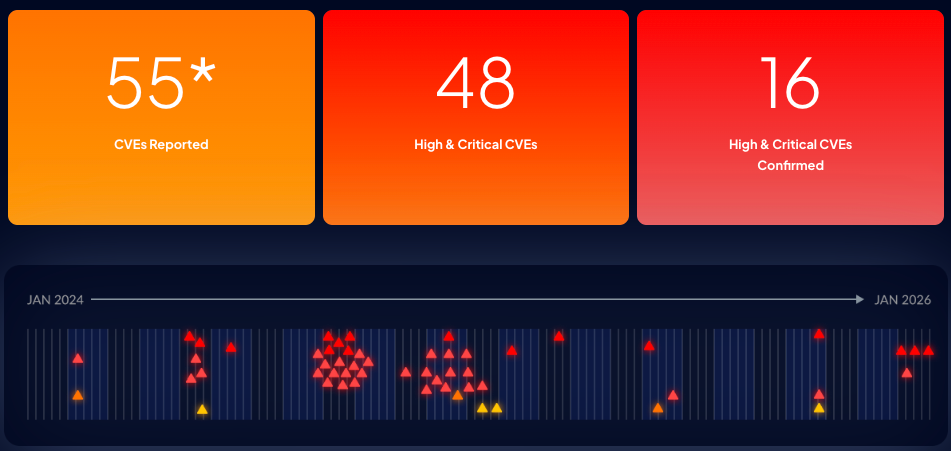
Another reminder of how much risk and operational burden can come with traditional backup infrastructure. When backup software requires customer-managed servers and ongoing patch maintenance, every new vulnerability can trigger urgent testing, change control, downtime planning, and recovery risk. The backup environment becomes one more system that needs to be secured under pressure.
That is the real challenge with legacy backup: resilience depends on the infrastructure that customers still have to manage, maintain, and protect.
And that problem gets worse when infrastructure itself becomes unpredictable.
When cyber resilience depends on hardware, organizations inherit hardware market volatility too. Long lead times, delayed refreshes, capacity constraints, and procurement bottlenecks can all affect backup growth and recovery readiness. Resilience becomes dependent on supply chains, budgets, and delivery windows instead of business requirements.
A familiar customer scenario
Imagine an infrastructure team already operating with tight resources. A new backup-related CVE appears, and the team now has to assess exposure, validate the patch, schedule maintenance windows, test for side effects, and push the update fast.
At the same time, the organization is waiting for new hardware or expanded capacity to support retention growth and recovery readiness.
Suddenly, the team is managing cyber risk and infrastructure risk at the same time.
Recovery is no longer just about whether backups exist. It is about whether the environment can be patched in time, scaled in time, and trusted in time. That is added complexity, added uncertainty, and added business risk.
Druva takes a different approach
Druva removes the operational burden that comes with customer-managed backup infrastructure. Because Druva is delivered as a fully managed SaaS platform, customers do not have to deploy backup servers, maintain backup storage, manage hardware refresh cycles, or scramble through emergency patching for backup infrastructure.
Instead of forcing teams to spend time on backup plumbing, Druva helps them focus on outcomes: stronger cyber resilience, simpler operations, and more predictable costs.
Why this matters: simplicity, security, savings
Theme
| What customers get
|
Simplicity
| No backup hardware to buy, size, refresh, or maintain. No backup servers to patch. No fragmented tooling across environments. One SaaS platform, less operational drag.
|
Security
| With Druva, customers benefit from a fully managed, zero-infrastructure solution. Our end-to-end Cyber Protection and Detection model is robust, featuring Managed Data Detection & Response with Safe Mode, entropy detection, and proactive Indicator of Compromise (IOC) scanning. This is complemented by Clean Curated Recovery and automated runbooks. Customers achieve resilient data protection and avoid the burden and exposure associated with managing and patching legacy backup servers.
|
Savings
| No appliance sprawl, no surprise hardware refresh cycle, and lower ongoing operational overhead. Customers get a more predictable cost model and lower total cost of ownership.
|
This is why the Veeam conversation is bigger than features. It is about the operating model.
Do customers want a backup strategy that depends on patching, procurement, and infrastructure timing? Or do they want one that removes those variables from the equation?
Customers do not want one more system to harden. They do not want one more maintenance window. They do not want resilience held hostage by the next CVE or the next hardware delay. Compare Druva vs Veeam now and see which solution fits your needs best.
There is one more reason this conversation matters: If identity is compromised, recovery can stall even when backup data is intact. Modern attacks do not just target data - they target the control plane.
Druva extends cyber resilience beyond backup infrastructure by protecting identity state across Entra ID, Active Directory, and Okta from the same SaaS platform, including the objects, configurations, policies, and relationships customers need to restore trusted access quickly. Read Whitepaper.
This is where Dru MetaGraph and DruAI make the story stronger. Dru MetaGraph adds context across identities, workloads, permissions, and changes, helping teams understand what changed, where the blast radius extends, and which recovery point is most trustworthy.
DruAI Deep Analysis Agents then use that context to accelerate investigation and guide response, turning days of manual correlation into faster, more directed recovery decisions.
Wrapping up
While a legacy environment is still patching backup servers and waiting for hardware, Druva helps customers recover the identity backbone first, validate cleaner recovery points, and move with more confidence. That is not just a simpler backup - it is identity-aware cyber resilience with lower operational burden.
Cyber resilience should be easier to buy, easier to run, and easier to trust. Druva removes the hardware. Removes the patch burden. Removes the unpredictability. So customers can protect data, recover faster, and lower TCO—without adding complexity.
Explore how Druva delivers true cyber resilience | Accelerate Cyber Resilience
Experience Druva’s identity-aware cyber resilience | Take 30-Day Free Trial